Now the Lord has given us room and we will flourish in the land" Genesis 26:22 5


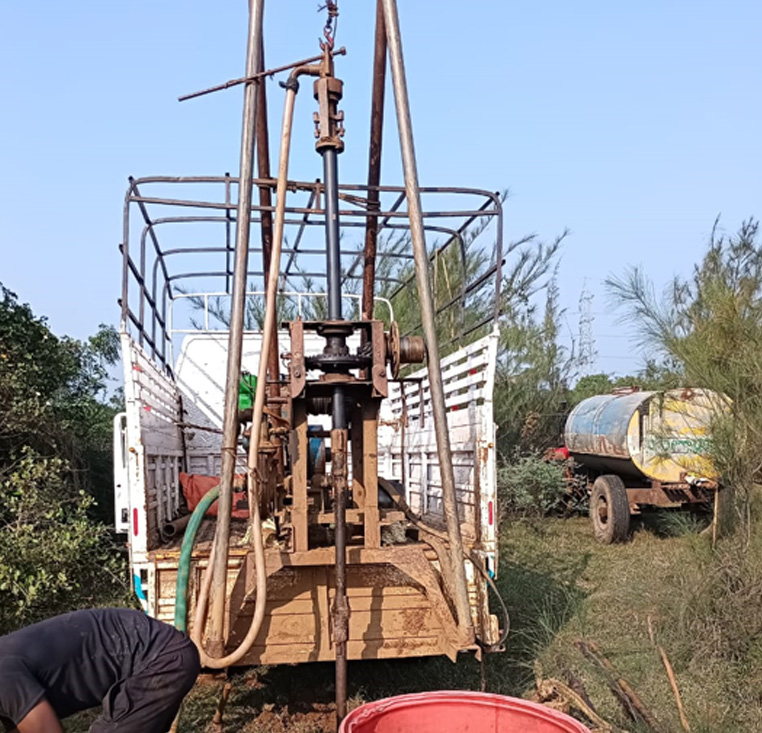
Method of Exploration for Soil Test
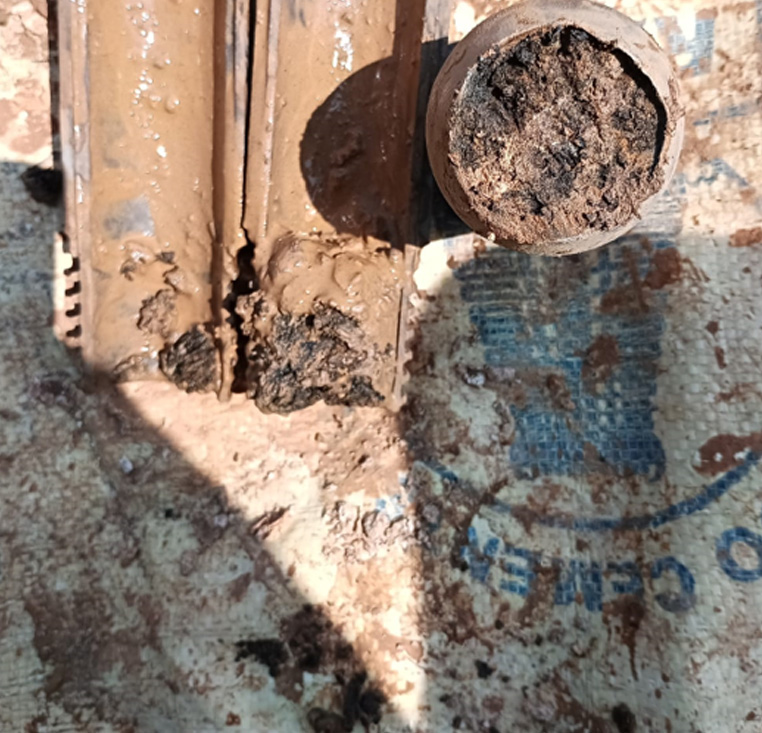
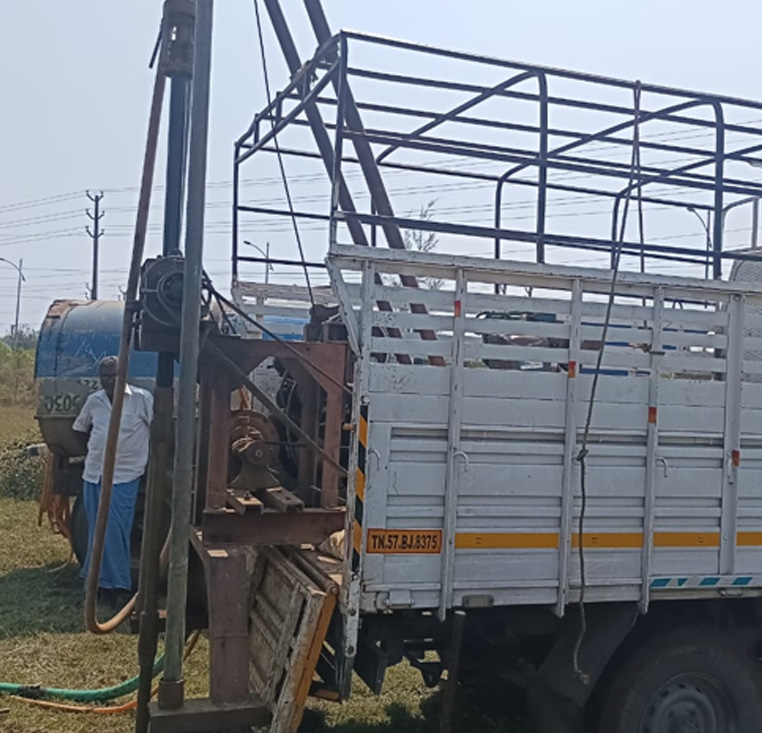
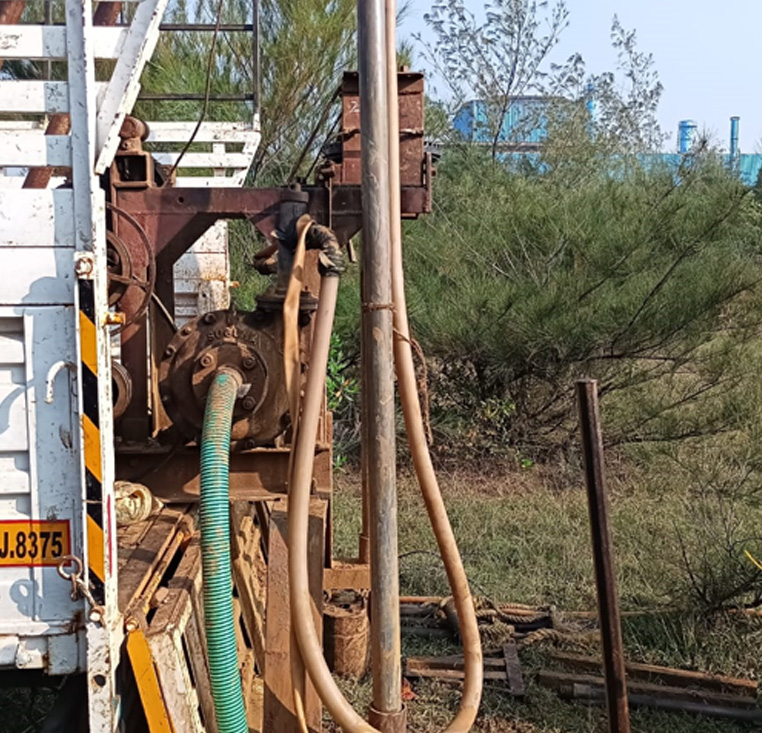
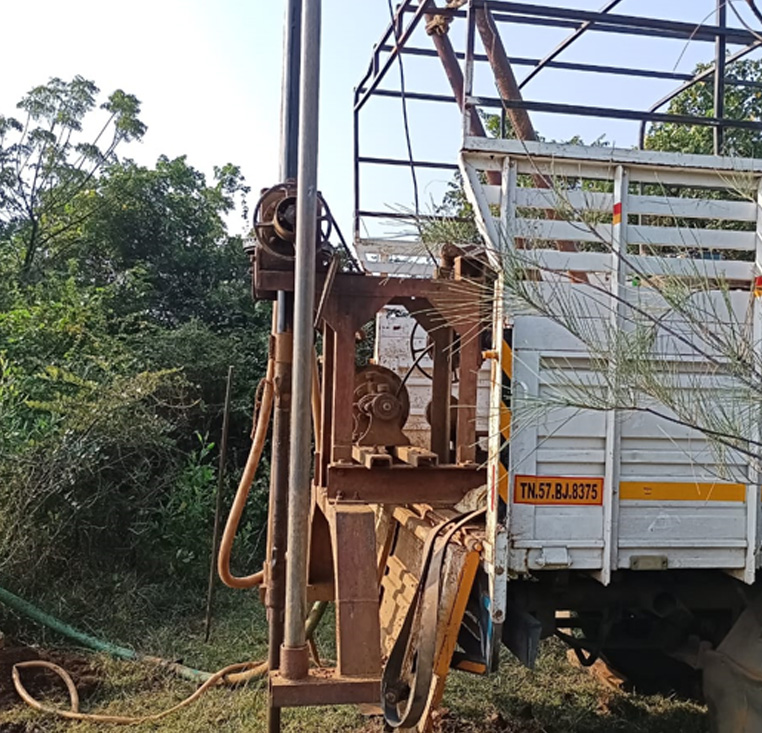
Borings were drilled using Clayx drilling Unit of dia.150mm has been used for making bore holes duly circulating bentonite slurry. In this method, the advancement of boring is made by the cutting action of a rotating bit that is kept in firm contact with the bottom of the hole. SPT consists of driving a standard Split Spoon Sampler, 51 mm outside diameter and 38-mm inside dia into soil under the blows of a drop hammer of 63.5 kg falling weight freely through 75-cm. The number of Blows required for 30 cm penetration of sampler in soil is designated as N value and it is termed as SPT blow count.
ii) The bit is attached to the lower end of hollow drill rod, which is rotated by a suitable chuck. Drilling mud, (viz) bentonite is continuously forced down the hollow drill rods. The mud returning upward through the annular space between the drill rods and side of the hole brings the soil particles to the surface. The soil exploration consists of three stages i.e., boring, sampling and testing which includes both field and lab tests. The Samples were collected at every 1.50 m depth of the bore hole. Samples were properly labeled for Lab tests. Bore log particulars and location of bore holes are annexed with this report.
Scope of the Exploration
It is determined to conduct the field Soil Test and Laboratory test to assess the safe bearing capacity till reaching N Value of the soil present in the proposed site. Boring Locations are presented in the report. Bore drill was terminated after reaching N Value more than 50/100 and Drilling will be terminated.
Field Tests
Penetration and sounding tests are the generally adopted field Tests. Standard Penetration Test is performed as per I.S. 2131-1981 (RA: 2007) as an in-situ test especially for cohesion less soils. The resistance is empirically correlated with some of the Engineering properties of soil such as density index, consistency, bearing capacity, etc. These tests are useful for general exploration of erratic soil profiles for finding depth to bedrock or hard stratum and to have an approximate indication of the strength and other properties of soils, particularly for cohesion less soil where it is difficult to obtain U.D.S.
In the field test the Standard Penetration Test sampler is driven by the free fall of a hammer weighing 63.5kg dropped from a height of 76cm.The sampler is initially driven through 15cm as a seating drive. It is further driven through 30cm. The number of blows required to drive the sampler 30cm below the seating drive is termed the penetration resistance ‘N’.
Geotechnical Investigation services provided for following areas
- Geotechnical Investigation/ Soil Testing Services for
- Wind Renewable Power/Solar Renewable Projects/ Commercial, Industrial, Ware House Factory Building, Heavy Structures, Sewage Treatment Plants, Industrial Power Plants, Highway Road Works, Transmission, Harbor / Port Construction across Tamil Nadu and India.
- Geotechnical consultancy services provided for Embankment, Soil Strengthening by employing various testing methods
- Shear Test, Bulk density, Dry Density, Moisture content, S.A, Sp.Gravity, Liquid Limit, Plastic Limit, Direct Shear on Soil Properties, UCC, Shear Parameters, Pi Value, C Value etc
- Trial Pit Excavation, Sub Soil Excavation for Transmission line structures, Existing Surface condictionsa, Road Projects etc
- Modulus of Sub Grade Reaction K Value by doing Plate Load Test for various warehouse flooring projects
- Proctor Density, Field CBR, Laboratory CBR Test,Soil Core Cutting & Sand Replacement Test for Hill Earth, GSB, WMM Layer for all type of Projects